A guide for moms supporting their college kids through exam season
Exam season has a way of turning even the calmest household into a low-grade stress festival.
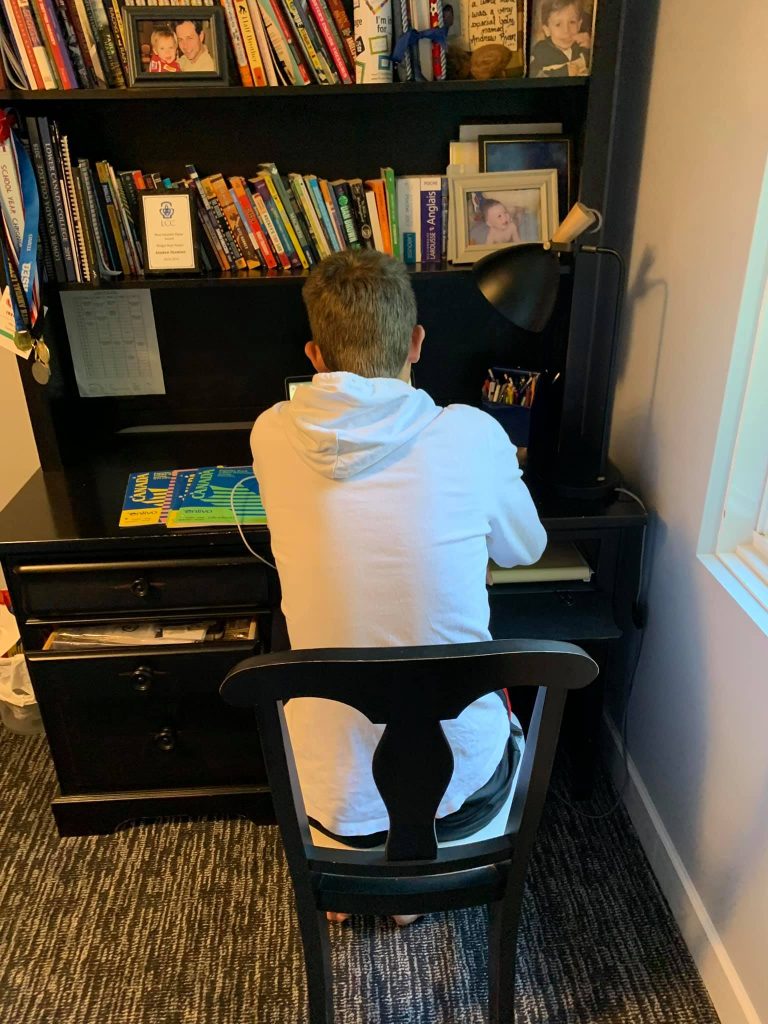
Truthfully, I’m a little grateful it’s just one of my boys in exams right now and not two. First-year engineering is no joke, and this season has been a lot.
Suddenly your teen or young adult is living on iced coffee, granola bars, and sheer adrenaline. Their sleep schedule becomes unrecognizable. Their bedroom looks like a paper explosion. And somehow, despite having “so much to do,” they also manage to spend 70 minutes doomscrolling.
Whether they’re in high school, CEGEP, or college, exam season has a way of taking over everything.
It’s a lot.
And for moms, it can be hard to know how to help. You want to support them, but not smother them. Encourage them, but not become their unpaid executive assistant. Remind them to take care of themselves, but not sound like a walking wellness podcast.
This is where realistic self-care matters.
Not the fantasy version of self-care. Not face masks, journaling under fairy lights, and a perfectly balanced smoothie bowl before every study session. I’m talking about grounded, practical, nervous-system-supporting self-care that actually helps students function better under pressure.
Because during exams, self-care is not extra. It is strategy.
I remember years ago, during a particularly stressful season in our home, one of my boys was overwhelmed with deadlines, studying, and that panicky feeling students know all too well, the one that shouts, I have too much to do and not enough time to do it. He was trying to power through everything at once, staying up too late, not eating well, and becoming increasingly more frazzled by the hour.
And like many moms, my first instinct was to fix it.
To jump in. To manage. To lecture a little. To suggest seventeen solutions in under three minutes.
Very helpful, obviously.
But what he actually needed wasn’t a productivity drill sergeant. He needed help coming back to baseline. And luckily, I’m a life coach and yoga & meditation teacher, so this is kinda my sweet spot.
Instead of asking, “Did you study enough?” or “Do you know your stuff?” I started asking, “What do you need right now to feel a little more steady?”
That changed everything.
Here’s what I want moms to remember: your child does not need a perfect routine during exams. They need an anchor.
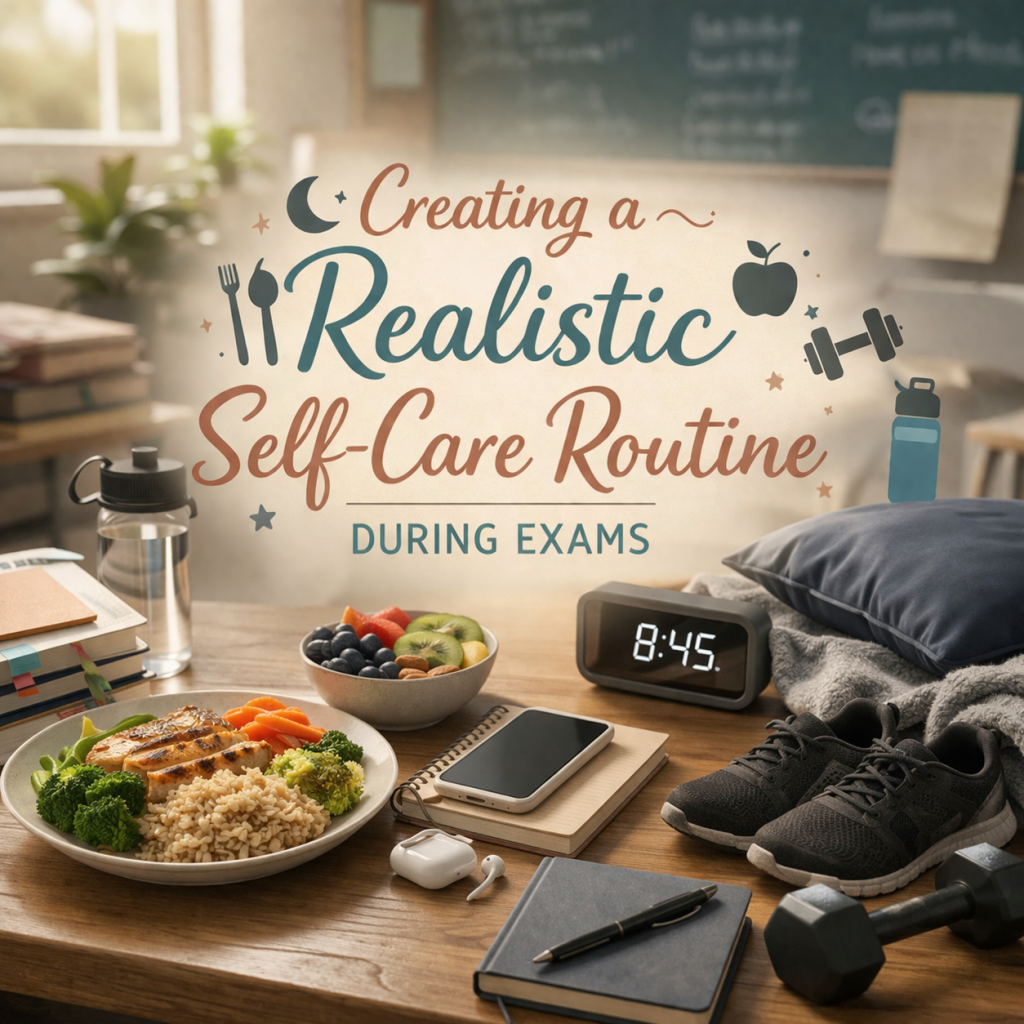
A realistic self-care routine during exam season can be surprisingly simple. It starts with a few basics that support the brain and body under stress.
First, sleep.
I know. This is the least exciting advice in the history of student life. But sleep is when the brain consolidates memory, regulates mood, and restores focus. An exhausted brain is not a more productive brain. It’s just a crankier one with worse recall.
Encourage your child to protect their sleep as much as possible, especially in the days leading up to an exam. Not perfection. Just better choices. Even one extra hour of sleep can make a real difference in concentration, emotional regulation, and decision-making.
One quick, actionable tip: challenge them to get to bed just 30 minutes earlier for the three nights leading up to an exam. Not two hours earlier. Not a total life overhaul. Just 30 minutes. Sometimes that small shift is enough to help the brain work with them instead of against them.
Second, food.
No, they do not need to become a wellness influencer overnight. But stable blood sugar matters. When students skip meals and fuel themselves with caffeine and sugar alone, it often creates more anxiety, more crashes, and less focus.
Think simple: protein, carbs, hydration, repeat.
A sandwich. Eggs and toast. Apple and peanut butter. Pasta with chicken. A smoothie if that’s all they can manage. This is not the moment to aim for culinary excellence. This is survival with nutrients. And if they like veggies, even better.
Third, movement.
Not a full workout. Not a hot girl walk with a matching set and a motivational soundtrack.
Just movement.
Ten minutes around the block. Stretching between chapters. A quick reset in the kitchen. Movement helps discharge stress and wake up the brain. It shifts energy. It interrupts the freeze state so many students slip into when they feel overwhelmed.
I always encouraged my boys to get outside during exams. Shoot some hoops. Ride their bikes. Get fresh air, get their heart rate up a little, and clear their heads. Sometimes the most productive thing they can do is step away for 20 minutes and come back calmer, clearer, and more able to focus.
And fourth, structure.
Stress makes everything feel big and blurry. A simple plan can bring the day back into focus.
I always say this: when life feels overwhelming, make it smaller.
Encourage your child to stop staring at the entire mountain and just name the next three steps. Review chapter 4. Make cue cards. Take a 15-minute break. That’s it. Clarity reduces panic.
And moms, your role here is powerful.
Not because you can study for them. You can’t. And not because you can remove all discomfort. You shouldn’t.
But you can help create an environment that says: you are safe, you are supported, and you do not have to destroy yourself to succeed.
That message matters.
Especially in a culture that still glorifies burnout like it’s some kind of academic badge of honor.
Let’s stop teaching our kids that suffering is proof they’re working hard enough.
A student who sleeps, eats, hydrates, breathes, and takes short breaks is not falling behind. They are building the capacity to perform.
And when these habits are learned early, they can stay with them well beyond high school or college. They become life skills that support them for the rest of their lives.
But beyond sleep, food, movement, and structure, there is one more type of well-being that matters deeply during exam season: emotional tone.
Your child is already carrying pressure. They do not need more intensity at home. They need steadiness. Calm. Perspective.
Sometimes the best thing you can say is, “Do your best. One step at a time. Your health matters too.”
Because exam season comes and goes. But the habits our kids build around stress, achievement, and self-worth? Those stay.
So let this season be an opportunity to teach something deeper.
That success is not built by running on empty.
That rest is not weakness.
That self-care is not a reward after the hard thing.
It is often what helps us do the hard thing well.
And if all else fails, hand them a snack, tell them you love them, and remind them that one exam will never define their worth.
Now that’s SELF-CARE, REDEFINED.




So dive in, have fun