There was a time when I thought the busiest person in the room was the most successful one.
Hint: that was before I nearly burned out at 27.
My calendar was color-coded (of course it was, confession it still is), my inbox never quite reached zero, and if someone asked how I was doing, my answer was almost always the same.
“Busy.”
Almost like it was a badge of honor.
Looking back, it’s funny. We wear our exhaustion like a designer handbag. We compare calendars the way kids compare hockey cards.
“You think you’re busy? Let me tell you about my week…”
Somewhere along the way, we confused being productive with being perpetually occupied.
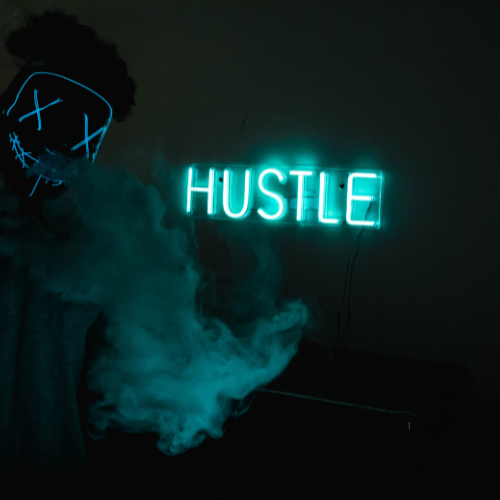
And that, I believe, is one of the biggest lies hustle culture ever sold us.
Because here’s what I’ve learned after more than two decades as an entrepreneur, life and career coach, and keynote speaker: being busy and being effective are not the same thing.
In fact, they’re often opposites.
I see it everywhere I go.
Whether I’m coaching ambitious women one-on-one, standing on a conference stage speaking to hundreds of professionals, or simply chatting with someone after an event, the conversation almost always lands in the same place.
“I’m exhausted.”
Not because people don’t love their work.
Because they don’t know how to stop carrying it.
The emails don’t end.
The notifications don’t stop.
The to-do list reproduces overnight like rabbits.
(Seriously… ever wonder who keeps adding things to your list while you’re sleeping?)
We’ve created a world where “always available” has quietly become the expectation. Somewhere along the way, productivity stopped being measured by impact and started being measured by responsiveness.
But our nervous systems were never designed for constant input.
Neuroscience tells us that chronic stress keeps our bodies in a prolonged state of sympathetic activation—better known as fight-or-flight. While this response is incredibly useful during a true emergency, living in that state day after day elevates cortisol, impairs memory and concentration, reduces creativity, and eventually leads to physical and emotional exhaustion.
In other words, the very habits we believe are helping us succeed are often the ones quietly undermining our performance.
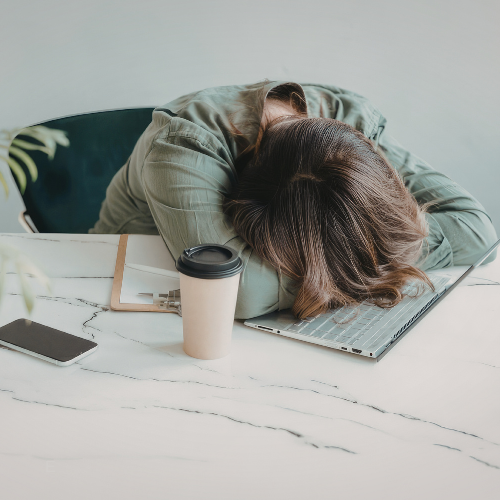
It’s why you can stare at your computer for twenty minutes trying to remember why you opened that document in the first place.
Or walk upstairs only to wonder what you came for.
Or reread the same email three times before hitting send.
No, you’re probably not losing your mind.
You’re overloaded.
There’s a difference.
A few weeks ago, I had the privilege of delivering a keynote to more than 700 professionals.
It was magical.
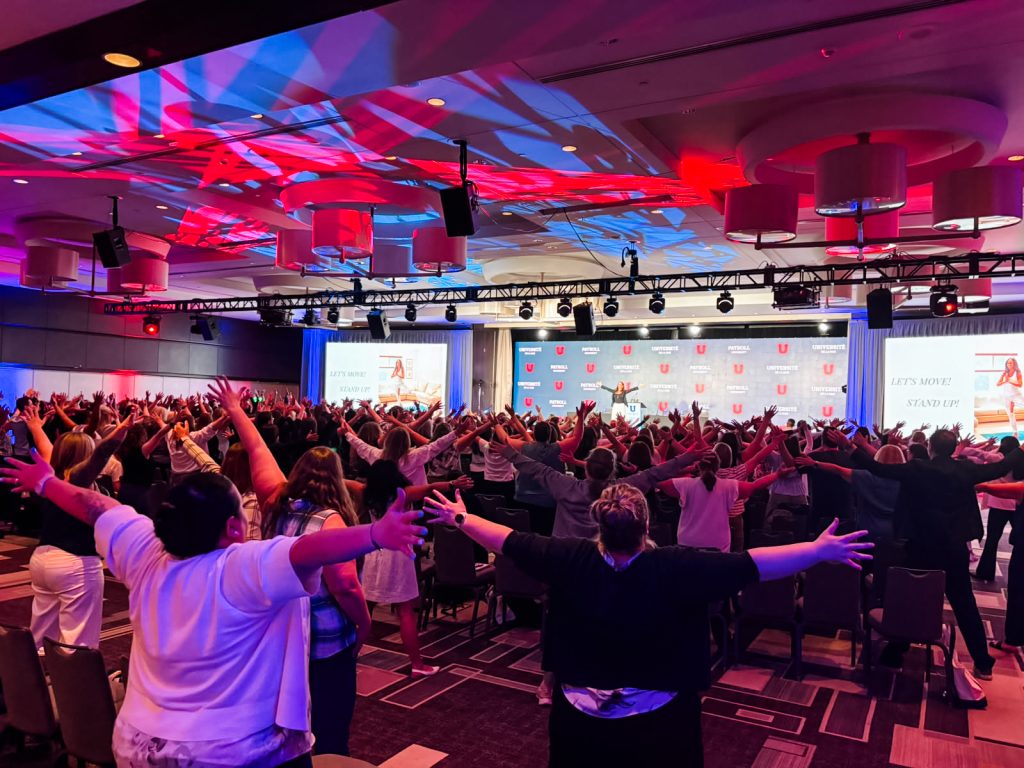
Afterward, something interesting happened.
People didn’t line up to ask me how they could fit more into their already packed schedules.
They asked something entirely different.
“How do I keep doing meaningful work without burning myself out?”
That question stopped me in my tracks.
Because I think we’re finally asking better questions.
The conversation is shifting.
People aren’t looking for another productivity hack.
They’re looking for sustainability.
They’re looking for permission to succeed without sacrificing themselves in the process.
And here’s the beautiful irony.
The highest-performing people I’ve ever worked with are rarely the ones operating at full speed all day long.
They know when to sprint.
They know when to recover.
Elite athletes understand this instinctively. No one expects an Olympic sprinter to run at maximum intensity twenty-four hours a day. Recovery isn’t considered weakness. It’s part of the training.
Yet somehow, in the workplace, we’ve convinced ourselves the opposite is true.
That skipping lunch is commitment.
That answering emails at 10:30 p.m. proves dedication.
That vacation is simply a different location from which to check Slack.
We would never expect our phones to function without recharging.
Yet we somehow expect more from ourselves than we do from our own devices.
Maybe it’s time we stopped glorifying depletion.
Maybe it’s time we started celebrating sustainability instead.
This doesn’t mean lowering your ambitions.
Please hear me on that.
I’ve spent my entire career encouraging women to dream bigger, raise their hand, start the business, write the book, ask for the promotion, and take up space.
I still believe all of that.
I just don’t believe success should cost you your health.
Or your relationships.
Or your joy.
Real success isn’t about how much you can cram into a calendar.
It’s about building a life where your energy matches your purpose.
Where your work feels meaningful instead of draining.
Where productivity is measured by impact, not exhaustion.
That’s the heartbeat behind my newest keynote, Redefining Hustle Culture: Sustainable Success in an Always-On World.
Because I believe we’re ready for a new definition of ambition.
One where boundaries aren’t barriers — they’re strategy.
Where self-care isn’t selfish — it’s leadership.
And where success isn’t measured by how busy you look, but by how fully you’re able to show up for the life you’ve worked so hard to build.
Maybe the future doesn’t belong to the people who hustle the hardest.
Maybe it belongs to the people who learn to sustain their brilliance.
And if that’s true, then perhaps the smartest thing you can do this week isn’t adding one more thing to your calendar.
It’s creating enough space to actually enjoy the life that’s already on it.
What do you think?

P.S. If this spoke to you today, this is exactly the work I do inside my private coaching practice: helping ambitious women build success that feels aligned, sustainable, and actually good to live inside. Learn more here: https://wellness.ericadiamond.com/erica-diamond-coaching