


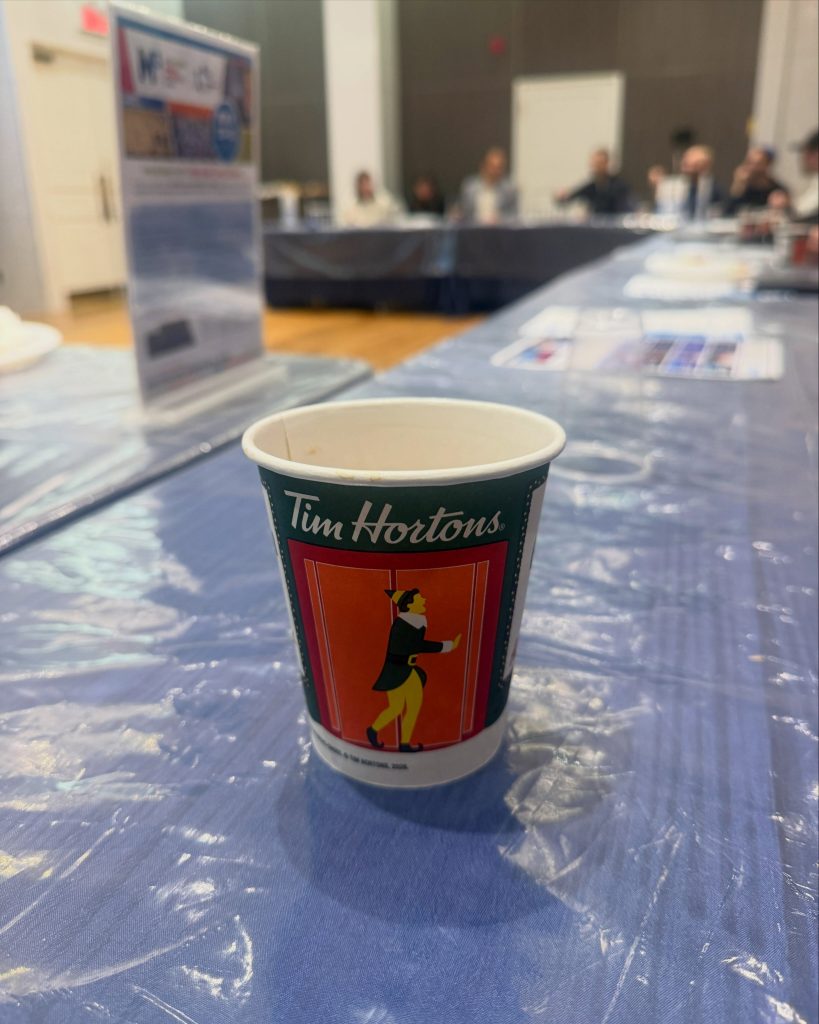
Last week, I found myself sitting at an entrepreneurs’ breakfast in Montreal, feeling something I hadn’t felt quite this way in years. I was excited, inspired, a little nervous, and, if I’m being completely transparent, somewhat like the new kid at school. Which is funny, considering I’ve been an entrepreneur for more than two decades.
Let me rewind.
At 24 years old, I started my first company, a business I would eventually grow and sell. Back then, I was young, ambitious, full of ideas, and figuring things out as I went along. I had the enthusiasm, the vision, and probably a healthy dose of that wonderful twenty-something confidence that allows you to leap before you’ve fully considered where you’re going to land. One of the organizations that helped me flesh out my business idea was ProMontreal Entrepreneurs.
Fast-forward more than two decades, and here I am, a seasoned entrepreneur, bestselling author, speaker, podcast host, and coach, finding myself in completely unfamiliar territory again. I’m building a tech startup from the ground up. And while I’ve spent years helping people navigate uncertainty, reinvention, and personal growth, I can assure you that knowing the tools and having to use them on yourself are two very different experiences!
Because here’s something we don’t talk about enough: You can be experienced and still feel like a beginner. You can be successful and still feel vulnerable. And you can know your worth while occasionally needing to remind yourself of it.
As I navigate this new chapter, I’ve found myself craving something I remember needing when I was 24. Community. People who understand the highs and lows of entrepreneurship, who can celebrate your wins, offer perspective when things get difficult, and remind you that you’re not the only person lying awake at 3 a.m. wondering whether your brilliant idea is actually brilliant.
So I reached back out to ProMontreal Entrepreneurs to see what they had going on.
Their response? “We have a breakfast tomorrow. Why don’t you come?”
And there I was. Full circle. A seasoned entrepreneur becoming a beginner all over again.
During the breakfast, one of the speakers shared a powerful lesson about self-worth that has stayed with me ever since.
He stood in front of the room holding up a crisp $50 bill and asked the audience, “Who wants this?” Naturally, almost every hand went up. I mean, who doesn’t want fifty dollars? Especially these days, when a trip to the grocery store can make you wonder whether you’ve accidentally purchased shares in the company.
Then he crumpled the bill into a ball and held it up again. “Who still wants it?” The hands stayed raised. Next, he threw it on the floor, stepped on it, rubbed it into the dirt, and picked it back up. By now, that once-perfect bill was wrinkled, dirty, and looking like it had been through a particularly difficult week.
One final question: “Who wants it now?”
Every hand went up again.
Why? Because despite everything that happened to that bill, its value never changed. Not by a single cent.
And isn’t that something we all need to remember? Life can knock us down, relationships can leave us bruised, careers can take unexpected turns, and people can make us feel like we’re somehow less than we were before. But none of those experiences automatically diminishes our inherent worth.
And then the speaker shared another fascinating story, one that illustrated this lesson from a slightly different perspective.
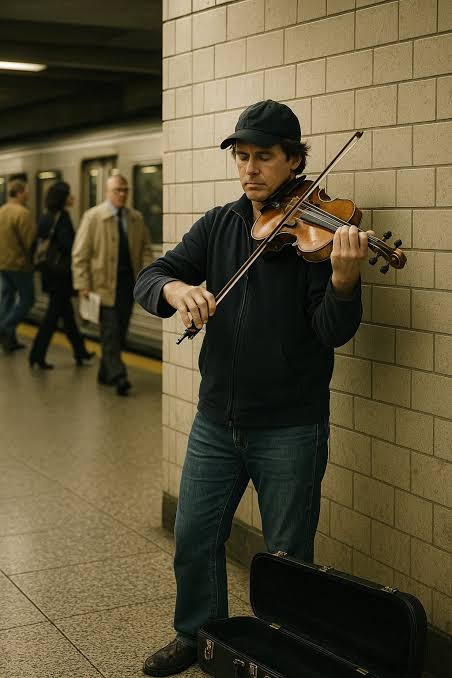
In 2007, world-renowned violinist Joshua Bell participated in an experiment organized by The Washington Post. Bell, who regularly performed in prestigious concert halls, stood anonymously in a Washington, D.C. metro station during the morning rush hour, playing extraordinary classical music on a multimillion-dollar Stradivarius violin.
For approximately 45 minutes, he played while commuters hurried past, barely noticing him. Only a handful stopped to listen, and he collected roughly $32.
Think about that for a moment.
The same musician who had sold out a concert hall just two nights earlier, playing the same magnificent instrument, was now largely ignored.
Same violinist. Same extraordinary talent. Different audience.
What changed wasn’t his ability. It was the context.
And sitting there listening, I couldn’t help thinking about how often we do this to ourselves.
How many times have you questioned your abilities because someone didn’t recognize them? How often have you lowered your expectations, apologized for your fees, stayed quiet in a meeting, or convinced yourself you weren’t good enough because a particular person or environment failed to appreciate what you brought to the table?
I’ve seen this repeatedly in my nearly two decades as a life and career coach. Brilliant women who begin questioning their competence after being passed over for a promotion. Successful professionals who allow one rejection to overshadow years of accomplishments. Women who have spent so much time proving their value to everyone else that they’ve forgotten how to recognize it themselves.
Psychologists Jennifer Crocker and Connie Wolfe have studied what they call contingent self-worth, the tendency to base our self-esteem on external factors such as achievement, approval, or recognition. When our sense of value depends on how others respond to us, our confidence can rise and fall with circumstances we don’t always control.
And that, my friends, is an exhausting way to live.
Your value cannot be determined solely by the people who happen to be standing in front of you.
Of course, the Joshua Bell experiment also reminds us that people are busy, distracted, and influenced by their surroundings. Those commuters weren’t necessarily incapable of appreciating beautiful music. They were trying to get to work! But that’s precisely why I love this story. Someone else’s inability to recognize your gifts isn’t necessarily a reliable measure of what those gifts are worth.
And sometimes, rather than working harder to convince people of our value, we need to ask whether we’re surrounding ourselves with people who can actually see it.
This applies to our careers, our relationships, our friendships, and the communities we choose.
We don’t build lasting confidence by berating ourselves every time life doesn’t go according to plan. We build it by learning, growing, and refusing to turn every disappointment into a personal indictment.
And that’s something I’m carrying into this next chapter of entrepreneurship.
I don’t need to have all the answers to belong in the room. I don’t need to prove that my past accomplishments guarantee future success. And I certainly don’t need to pretend that starting something new isn’t occasionally terrifying.
Being a beginner doesn’t diminish your experience. Starting over doesn’t erase everything you’ve already built. And being overlooked doesn’t mean you have nothing valuable to offer.
As you begin this week, I want you to consider one question: Are you spending too much energy trying to prove your worth in places where it isn’t being recognized?
Maybe it’s time to advocate for yourself, have an overdue conversation, set a boundary, or find a community that supports the person you’re becoming.
Sometimes the answer isn’t to work harder, become better, or make yourself more acceptable to the people around you.
Sometimes you need to change the room.
And speaking of rooms, I left that breakfast feeling grateful. Grateful for the people who helped me when I was 24, for the community that welcomed me back decades later, and for the reminder that no matter how much experience we accumulate, we’re never beyond needing connection and encouragement.
What a beautiful full-circle moment.
Know your worth. Hold your value. And put yourself in rooms where you have the opportunity to thrive.
Because the world needs what you have to offer, even if not everyone recognizes it yet.
Here’s to new beginnings, being brave enough to be a beginner again, and finding our people along the way.