For years, wellness was sold to us as a quest to do more.
More steps.
More supplements.
More tracking.
More routines.
More discipline.
More optimization.
And listen, I love a good routine. I am the woman who will happily talk about a morning walk, hydration, journaling, yoga, meditation, magnesium, protein, and boundaries before 9 a.m.
But I think we are entering a new era of wellness.
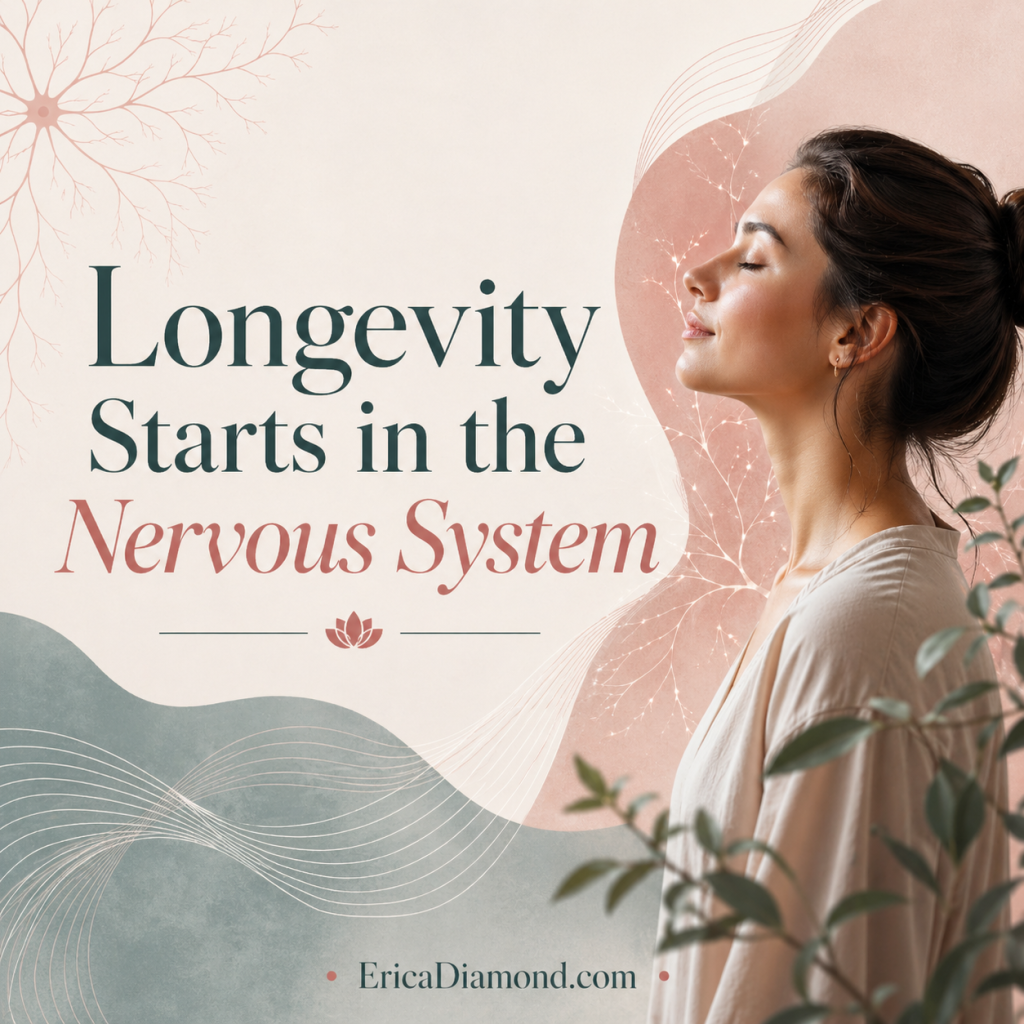
I am calling it The Great Nervous System Reset.
Because the question is no longer just, “How can I live longer?”
The better question is, “How can I live longer without spending my life in a state of chronic stress?”
That is where the nervous system comes in.
Your nervous system is constantly scanning your environment and deciding, often without your conscious permission, whether you are safe, stressed, threatened, rushed, overwhelmed, or at ease.
And here is the part we do not talk about enough:
You can be eating well, exercising, taking your vitamins, checking all the wellness boxes, and still be living in a body that feels like it is bracing for impact.
That is not longevity.
That is survival with a green juice.
Why This Matters for Longevity
There is real science behind this.
Researchers often talk about something called allostatic load, which is basically the wear and tear that builds up in the body when stress is chronic and recovery is not happening often enough.
A 2022 systematic review found that higher allostatic load was associated with a 22% increased risk of all-cause mortality and a 31% increased risk of cardiovascular disease mortality. In other words, chronic stress is not just “in your head.” Over time, it can affect the systems that help keep you healthy, resilient, and alive.
That feels important.
Because longevity is not only about what you add to your life.
It is also about what your body has been carrying.
My Own Nervous System Wake-Up Call
I learned this the hard way.
Earlier in my career, I came very close to burning out.
From the outside, I looked like I was doing everything right. I was ambitious, productive, capable, and always moving. I knew how to push. I knew how to show up. I knew how to get things done.
But inside, my body was telling a different story.
I was tired in a way that sleep did not fully fix. My mind was always racing. My body felt like it was always “on.” Even when I was resting, I was not really resting. I was thinking, planning, anticipating, solving, carrying.
And like many high-achieving women, I thought the answer was to try harder.
I needed better time management.
More discipline.
A cleaner routine.
A stronger mindset.
A more organized calendar.
Some of that helped, yes.
But one of the biggest antidotes to burnout was not doing more.
It was learning how to regulate my nervous system.
It was learning how to pause before I crashed.
How to breathe before I spiraled.
How to create pockets of stillness inside full days.
How to stop treating my body like an inconvenience.
How to understand that calm is not laziness. It is repair.
That shift changed everything.
It changed how I worked.
How I moved through pressure.
How I protected my energy.
How I defined success.
And honestly, it became one of the roots of the work I do today.
Because self-care is not just candles and bubble baths.
Self-care is teaching your body that it does not have to live in emergency mode.
5 Ways to Reset Your Nervous System
Here are five simple ways to begin.
1. Try the longer exhale
This is one of the fastest ways to send your body a signal of safety.
Try this:
Inhale for 4.
Exhale for 6 or 8.
Do this for one minute.
A longer exhale can help shift the body away from fight-or-flight and toward a calmer parasympathetic state. Translation: your body starts to understand, “We are not being chased. We are okay.”
I do this before calls, before speaking, before difficult conversations, and sometimes while sitting in my car before walking into the house.
It is tiny. It is free. It works.
2. Build micro-rest into your day
We keep waiting for the big vacation.
The retreat.
The weekend away.
The full spa day.
The perfect empty afternoon.
Those are beautiful, and I highly recommend them.
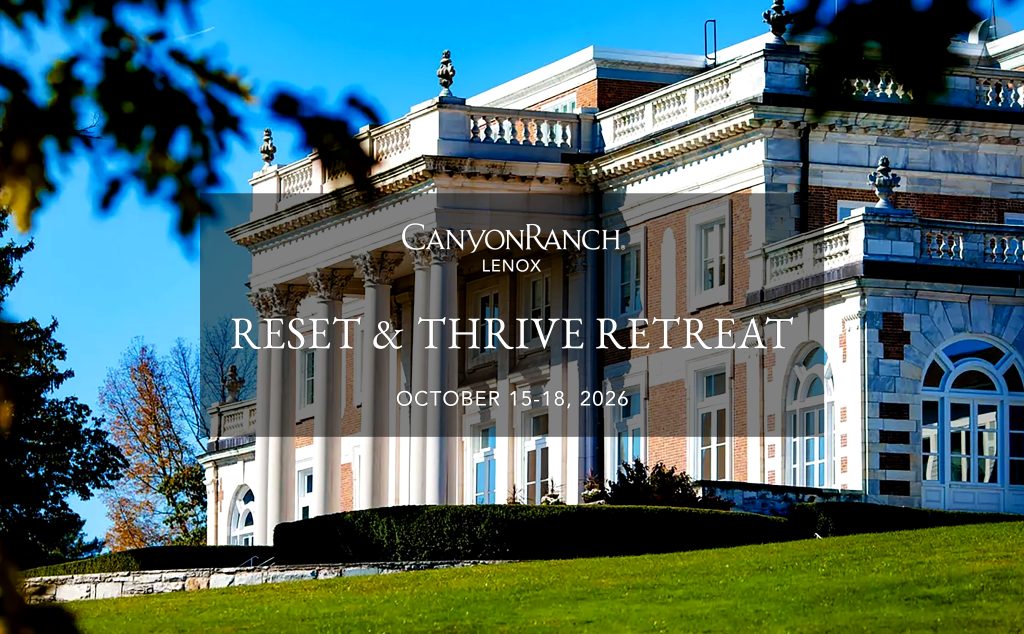
In fact, I would love to invite you to my retreat this fall. Reset & Thrive IS GOING TO BE THE ULTIMATE NERVOUS SYSTEM RESET AND LONGEVITY HACK.
But your nervous system also needs recovery in smaller doses.
Two minutes between meetings.
A quiet cup of tea without scrolling.
A walk around the block.
Lying on the floor for five minutes.
Closing your eyes before the next thing begins.
Micro-rest teaches your body that restoration is not only allowed after collapse.
It is allowed throughout the day.
3. Reduce your inputs
Sometimes we are not exhausted from our lives.
We are exhausted from the amount of information entering our brains.
News.
Texts.
Emails.
Notifications.
Podcasts.
Group chats.
Instagram.
Everyone’s opinions.
Everyone’s urgency.
Your nervous system was not designed to process the emotional load of the entire world before breakfast.
Try creating one low-stimulation pocket in your day.
No phone for the first 20 minutes of the morning.
No scrolling while eating.
No email during your walk.
No news before bed.
This is not about being uninformed.
It is about being unavailable to constant stimulation.
There is a difference.
4. Move gently, not just intensely
I love exercise. Movement is medicine.
But not every workout needs to be a punishment.
When your nervous system is already overloaded, sometimes the most healing movement is not the most intense movement.
A walk.
Yoga.
Stretching.
Dancing in your kitchen.
Gentle strength training.
A slow bike ride.
Shaking out your arms and legs like a slightly unhinged but emotionally healthy person.
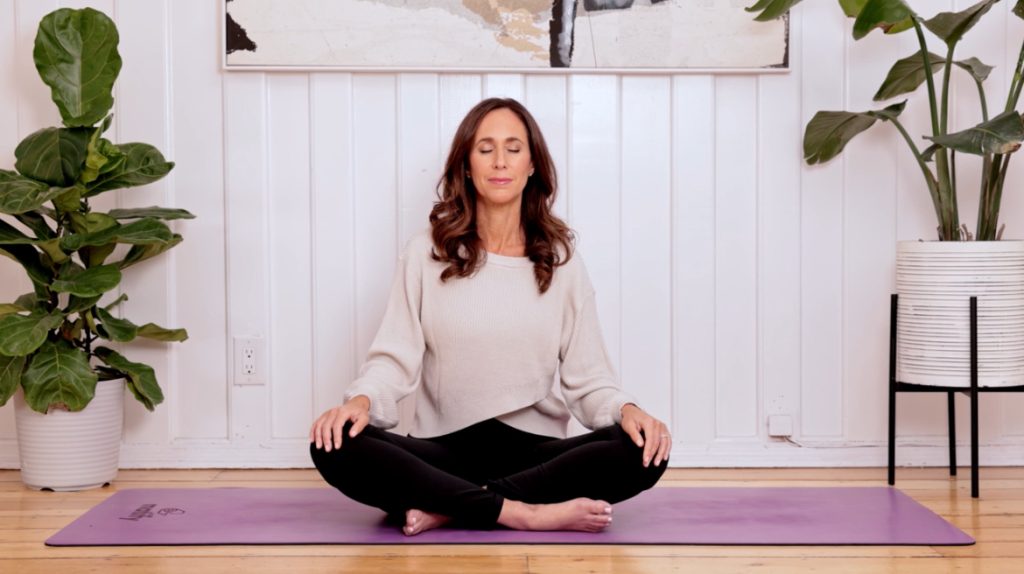
Movement helps discharge stress from the body. But the goal is not always to crush yourself.
Sometimes the goal is to come back to yourself.
5. Create one daily signal of safety
This is my favorite.
Ask yourself:
“What is one thing I can do today that tells my body I am safe?”
Not successful.
Not impressive.
Not productive.
Safe.
Maybe it is eating lunch sitting down.
Maybe it is saying no.
Maybe it is asking for help.
Maybe it is turning your phone off earlier.
Maybe it is going to bed instead of doing one more thing.
Maybe it is putting your hand on your heart and taking three breaths.
Your body does not only listen to what you say.
It listens to what you repeatedly practice.
The New Longevity Conversation
I believe longevity is going to become less about extreme optimization and more about sustainable regulation.
Yes, we need movement.
Yes, we need nourishing food.
Yes, we need sleep.
Yes, we need connection, purpose, and healthy habits.
But we also need to ask:
Can I recover?
Can I soften?
Can I pause?
Can I feel safe in my own life?
Can I stop living like everything is urgent?
Because a long life is not just measured in years.
It is measured in energy.
Presence.
Peace.
Resilience.
Joy.
Capacity.
The ability to fully inhabit the life you worked so hard to build.
This week, maybe self-care is not about adding one more thing to your list.
Maybe it is about removing one layer of pressure.
Maybe it is about letting your body exhale.
Maybe it is about remembering that your nervous system is not something to hack.
It is something to care for.
And maybe that is where real longevity begins.



to SEFTYHUB If you’re looking for a safe means in which you can spy and monitor your pals phone(whether android or iPhone). I would gladly recommend you hire this trustworthy SEFTYHUB . They are the most trustworthy and reliable source for tracking and Monitoring jobs. I saw so many great reviews about them online and decided to hire them also and they got me complete access to my husband phones in less than 4 hours. They deliver a ghost job in the sense that your spouse won’t notice you’re monitoring them and I gladly gait access to his phone everyday, I had access to his phone call conversations, web history, text messages, email, social media conversations, real time locations, calls logs and history and this SEFTYHUB also gave me access to all deleted datas on his phone. Most times when I’m at work I click on the SEFTYHUB spy dashboard and see where he’s at and what he’s doing. I’m really impressed with the good works of this GEEK and I’m appy to have found out the truth. I know a lot of people need a relaible private investigator, you can contact them via Gmail…
[email protected]
TELEGRAM@SEFTYHUB