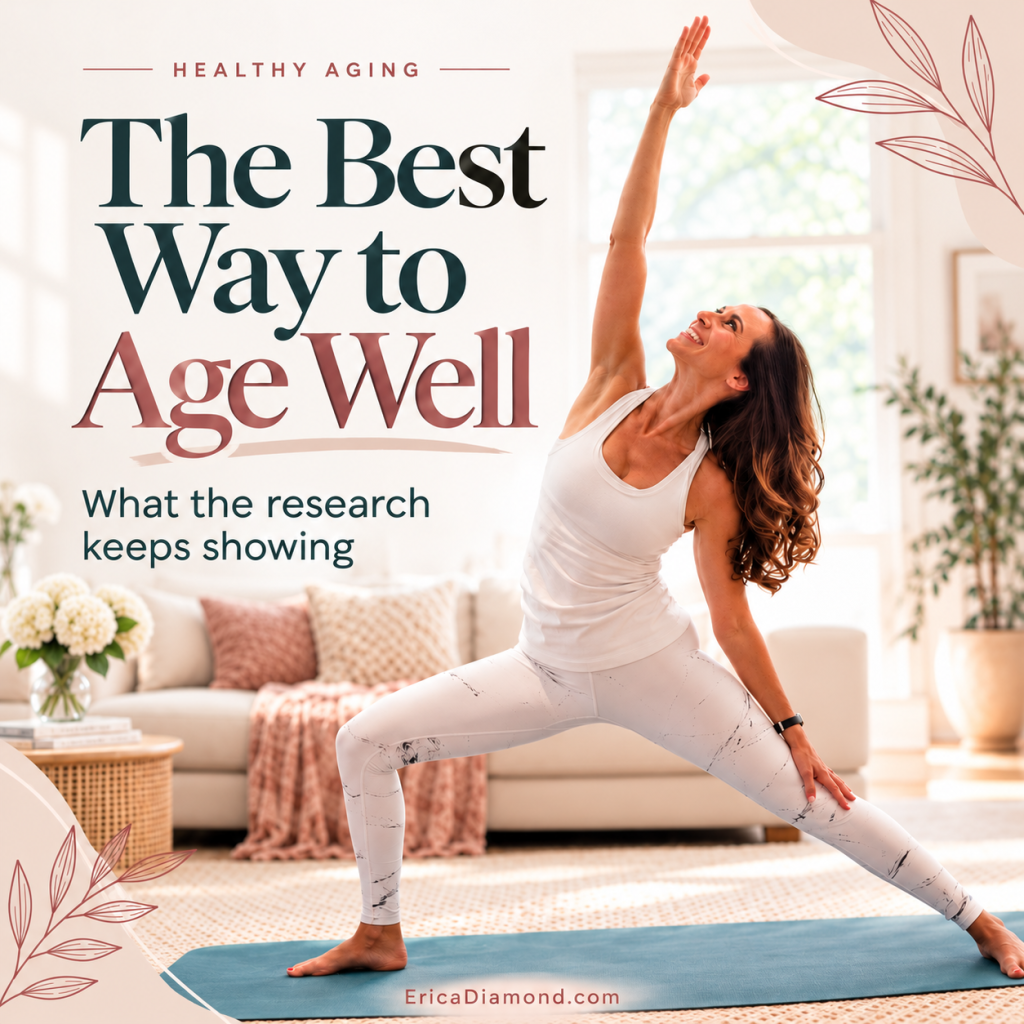
Lately, I’ve been thinking a lot about aging well. Not anti-aging. Not trying to turn back the clock. I mean feeling strong, clear, connected and energized as we move through our 40s, 50s, 60s and beyond.
And what’s interesting is that when you look at the research, the answer isn’t particularly glamorous.
The basics keep winning.
I’m seeing the same thing in my coaching practice. The men and women who seem to feel the best are rarely doing 17 complicated wellness hacks. They are usually getting a handful of fundamentals right, consistently. And it’s changing how they show up in work and life. They have more energy, more clarity, more patience, and more capacity for the things that matter most.
So, what are the fundamentals that matter most?
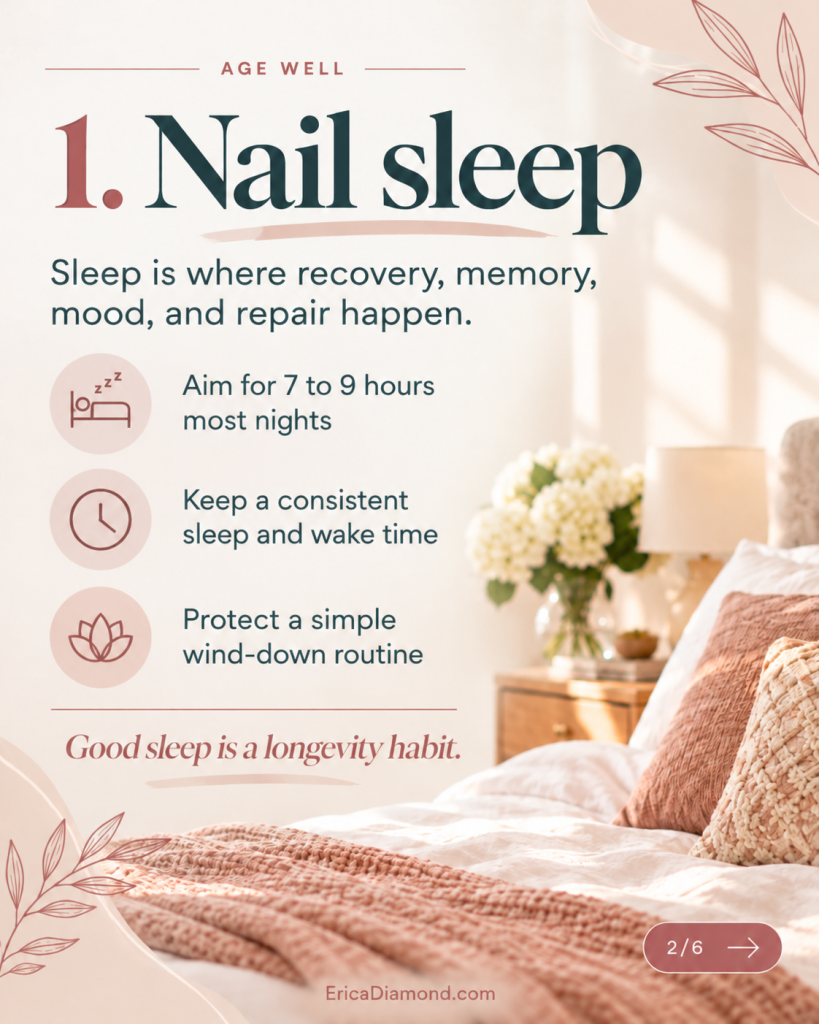
1. Nail your sleep
This is the one people love to underestimate.
We tell ourselves we’ll catch up on the weekend. We push through. We scroll too late. We squeeze one more thing into the day.
But sleep is where so much repair happens. Memory. Mood. Hormones. Recovery. Focus. Even our ability to manage stress well.
And I see this in coaching all the time. When someone is chronically underslept, everything feels harder. Decisions feel heavier. Patience gets shorter. Motivation drops. Boundaries get harder to hold.
You do not need the perfect sleep routine, but you do need to respect sleep as a health habit.
Aim for consistency. Create a wind-down routine. Stop treating bedtime like the leftover part of your day.
Good sleep is a longevity habit.
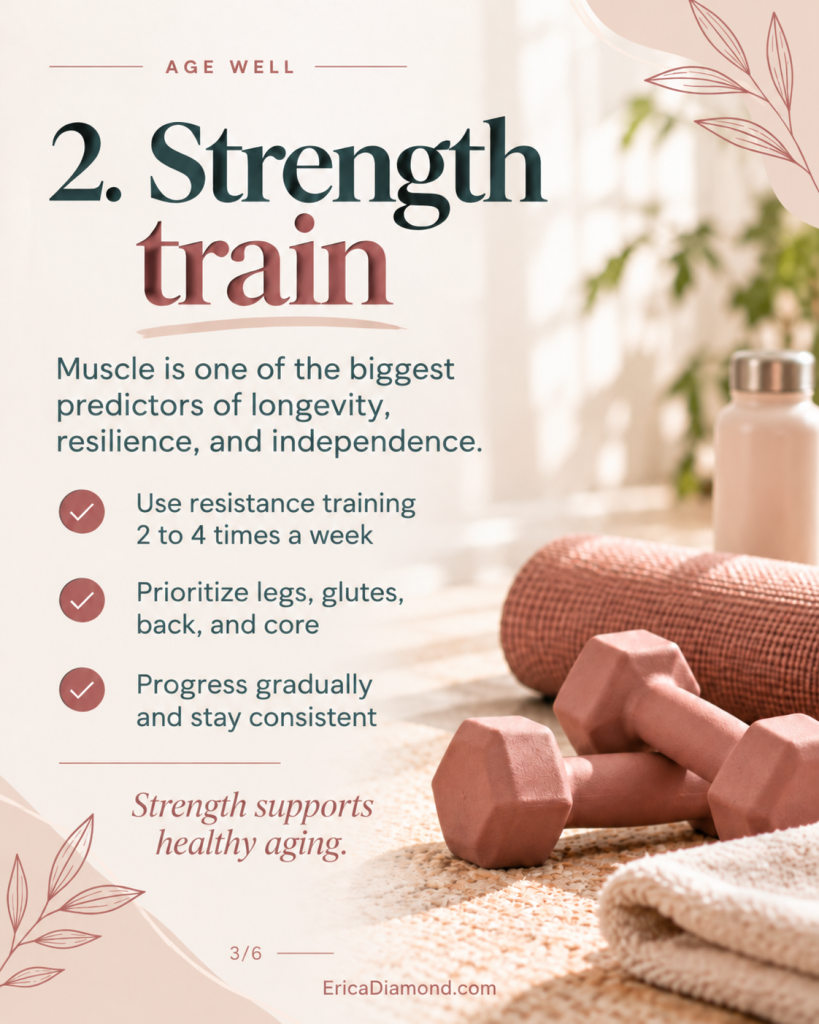
2. Strength train
If there is one thing I think more women, especially, need to hear, it’s this: strength matters.
Not because you need to look a certain way.
Because muscle supports your metabolism, mobility, bone health, resilience and independence as you age.
And no, you do not need to become a gym person.
You can use weights at home. Resistance bands. Machines. Bodyweight. A trainer. A class. Whatever works for you.
What matters most is consistency.
I also see this with clients. The people who make movement part of their week, instead of waiting until they “have time,” tend to feel more energized and grounded in their days.
And please, start where you are. You do not need to go from zero to five workouts a week.
Two or three consistent sessions can be a very meaningful start.
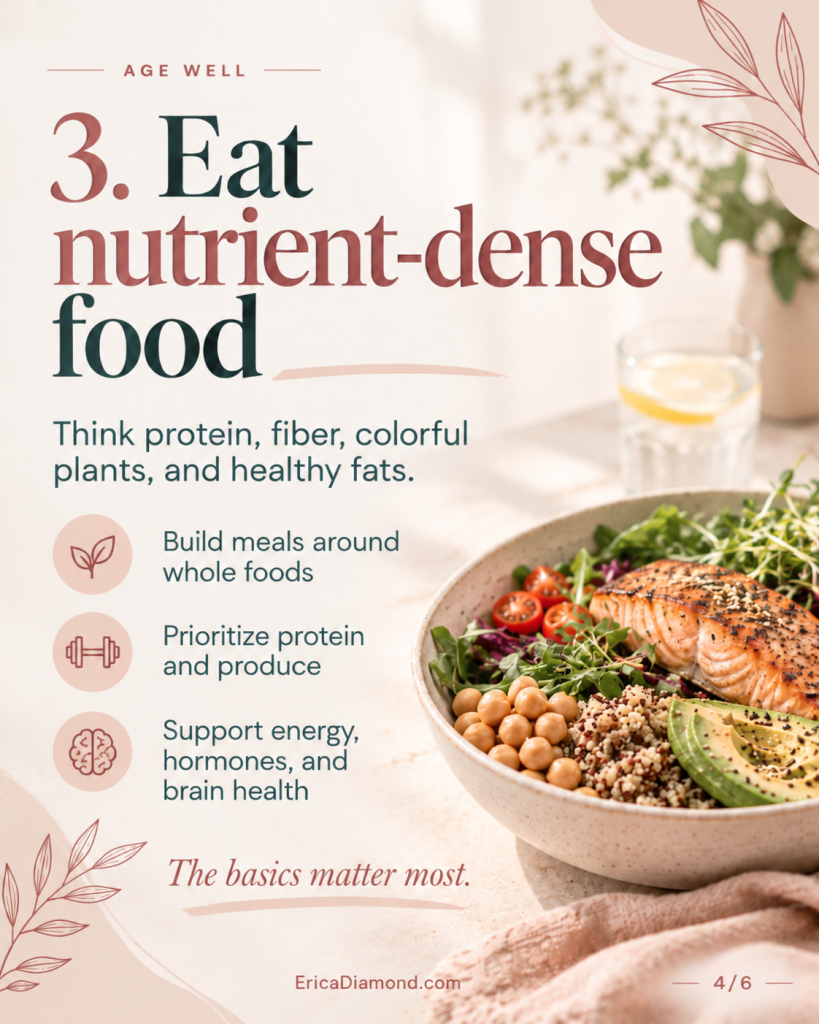
3. Eat nutrient-dense food
This one does not have to be complicated either.
Think protein. Fiber. Colorful plants. Healthy fats. Whole foods most of the time.
Not perfection.
Not restriction.
Not a food rulebook that makes you miserable.
Food should support your energy, brain, hormones, digestion and overall health.
I find that people often want a dramatic plan because dramatic feels productive. But the better question is usually much simpler:
What can I eat more consistently that actually nourishes me?
Sometimes the answer is adding protein to breakfast. Okay, guilty. Eggs and cottage cheese make a pretty regular appearance over here.
Sometimes it is eating a good lunch instead of running on coffee until 3:00 PM. This one I’m actually good at. I honestly can’t think of a time I’ve ever skipped a meal. Ever.
Sometimes it is simply making sure there is real food in the house.
The basics matter most.
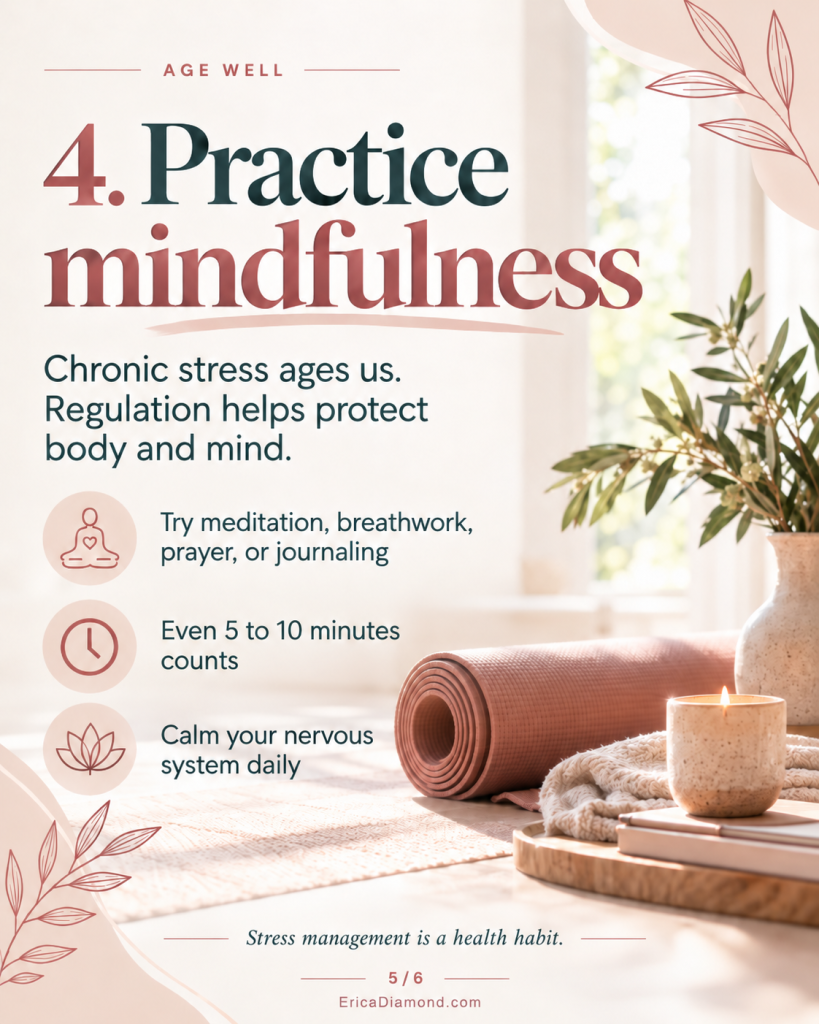
4. Practice stress management
This one is personal for me because yoga, meditation and journaling have been part of my life for over 20 years.
And I will say this forever: stress management is not something you do only when life falls apart.
It is a health habit.
Chronic stress takes a toll on the body and mind, and most of us are carrying more stimulation, responsibility, noise and mental load than we realize.
Your practice might be meditation.
It might be prayer.
It might be yoga, breathwork, a body scan, journaling, walking outside or sitting quietly before the house wakes up.
It does not need to be an hour.
Five to ten minutes counts. And makes the world of difference!
What matters is giving your nervous system a regular chance to come back down.
I see such a difference in those I coach who have some kind of practice that brings them back to themselves. They recover faster. They react less. They make clearer decisions.
Calm is not laziness. It is capacity.
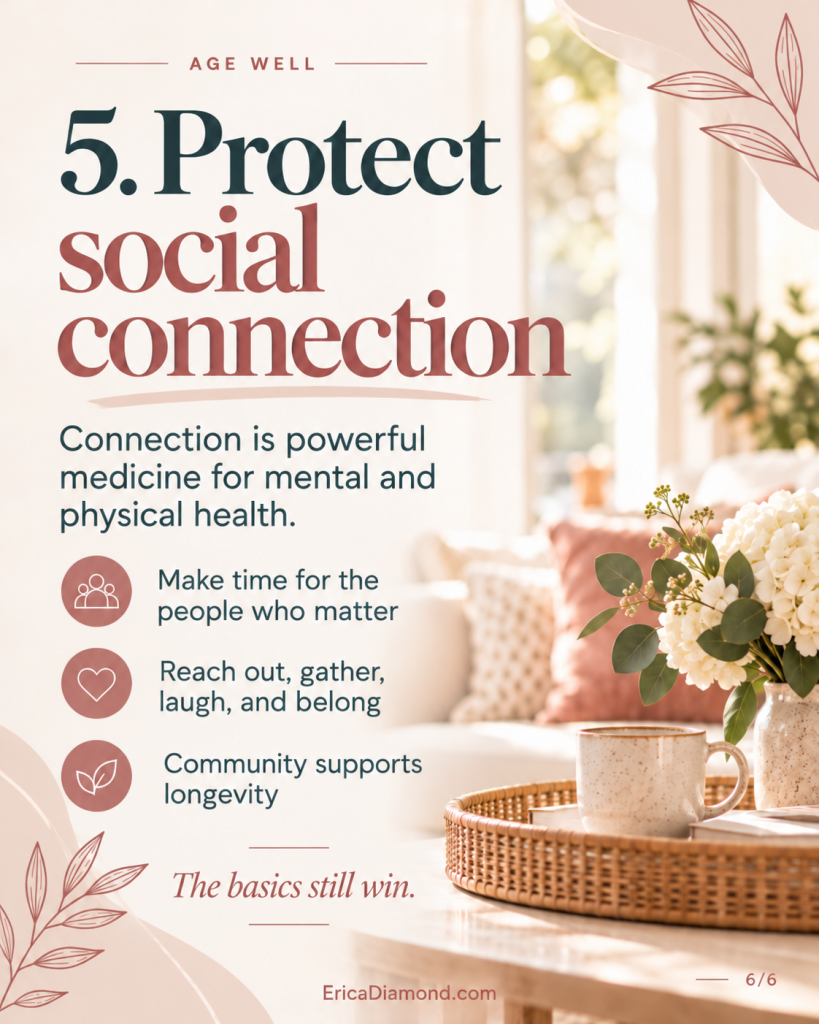
5. Protect social connection
This one might be the most overlooked.
We talk so much about food, exercise and sleep, but connection matters deeply too.
The people we love.
The people who make us laugh.
The people who remind us who we are.
Community, friendship, belonging, time together. These things are not extras.
For me, it’s mahjong and pickleball. The women, the laughter and those joyful pockets of time have become some of the highlights of my week, and I make a point of protecting them.

And yet, when life gets busy, they are often the first things to go.
We cancel the dinner.
We skip the walk.
We stop calling the friend.
We tell ourselves we’ll reconnect when things calm down.
But life rarely calms down on its own.
I see this in coaching too. People can be doing all the “right” things and still feel flat or disconnected when there is not enough real connection in their lives.
Make time for the people who matter.
Reach out.
Gather.
Laugh.
Belong.
The good news? Aging well may be simpler than we think.
You do not need 17 supplements, a complicated morning routine or the latest wellness trend.
You need the basics, done consistently.
Sleep a little better.
Build strength.
Eat food that nourishes you.
Create a practice that helps you regulate stress.
Stay connected to people you love.
None of this is particularly flashy.
But the research keeps pointing us back to the same place.
And from what I’m seeing in my coaching practice as well my own life, real life does too.
The basics still win.
I’d love to know, which one of these five could use a little more attention in your life right now?



Dan Buettner.
Netflix documentary called “Live to 100: The Blue Zone”.
He’s the original researcher that studied Okinawa., where people were living to an average of 85 when the average herre was 77
Blue Zoneis a term coined by a doctor in the 1950’s.
Dan went on to research other Blue Zones and found the correlation between the 5 pillars of health, and was the first to really understand wellness and longevity by observing and collecting tons of data….