A few weeks ago, I caught myself doing something that made me laugh. I had had one of those stretches where everything felt full. Work was full, life was full, my calendar was full, and I was doing that thing so many of us do where we keep telling ourselves, “I’m fine,” while simultaneously wondering why everyone seems to need something from us. So naturally, I decided I needed some self-care. I started thinking about booking a massage. Maybe I needed a day completely off. Perhaps I needed a yoga class, a facial, or a little getaway.
And then I stopped and realized something. What I actually needed was to cancel something. Or two. That was it. No beautifully packaged wellness solution arriving at my front door. No appointment. No new product. I needed space. I needed a couple less things on my calendar. And I thought, this right here is where I think we have gotten self-care wrong.
Now, I say this as someone who has been teaching self-care, wellness, yoga, meditation and burnout prevention for years. I love all the things. I looove a massage. I love a good skincare product. I love my Bliss Essential oils. Put me in a fluffy spa robe with nowhere to be for three hours and I am living my best life! This is not an anti-self-care post. But somewhere along the way, self-care became something we were taught to buy rather than something we were taught to practice.
We have never had more access to products and services promising to make us feel better. There are meditation apps, supplements, sleep trackers, wellness retreats, infrared saunas, cold plunges, journals, red-light therapy, green powders and enough morning routines on social media to make you tired before you even get out of bed. The wellness industry is booming, and yet so many of the women and professionals I speak to every day still feel exhausted, overwhelmed and stretched too thin.
The science helps explain why. The World Health Organization (WHO) defines burnout as a result of chronic workplace stress that has not been successfully managed. It is associated with exhaustion, increased mental distance or cynicism toward work, and reduced professional effectiveness. The important words there are “chronic stress that has not been successfully managed.” Burnout is not a failure to buy enough bath salts. It is what can happen when the demands on us consistently exceed our ability to recover.
And that is the piece we often miss. We have confused things that make us feel good temporarily with the deeper practices that actually support our well-being over time. There is nothing wrong with pleasure, rest or treating ourselves. Those things matter. Heck, that’s why I created Reset & Thrive Canyon Ranch last weekend! But a massage cannot fix a calendar that is chronically overloaded. A meditation app cannot create the boundary you are afraid to set. A wellness weekend can give you perspective and space to breathe, but eventually you have to go home. Then the real question becomes: what are you going to do differently?
Real self-care is often much less glamorous than the version we see online. Sometimes it looks like yoga at sunrise, and sometimes it looks like saying, “No, I can’t do that.” Sometimes it means eating a beautiful nourishing meal, and sometimes it means ordering pizza for dinner because you are exhausted and refusing to make your evening harder than it needs to be. Sometimes it means journaling for twenty minutes. Sometimes it means closing your laptop. Sometimes it means realizing you do not need a better morning routine. You need to stop going to bed at midnight.
And sometimes, the most loving thing you can do for yourself is disappoint someone else.
That can be difficult, particularly for high-functioning, dependable people. Many of the women I coach are incredibly good at knowing what everyone else needs. They know what their children need, their colleagues need, their clients need, their partners need and their aging parents need. Ask them what they need, and suddenly we need to schedule a meeting.
This is why I believe real self-care has much more to do with capacity than consumption. It is about paying attention to the signals your body and mind are giving you before they have to shout. It is about protecting your energy, building recovery into your life, setting boundaries, asking for help, sleeping, moving, connecting and making choices that support the way you actually want to live.
We have also somehow managed to turn wellness into another performance metric. Did you meditate? Did you drink enough water? Did you get your steps? Did you strength train? Did you journal? Did you take your supplements? Did you sleep eight hours? Suddenly we are stressed about whether we are managing our stress correctly. That was not the assignment.
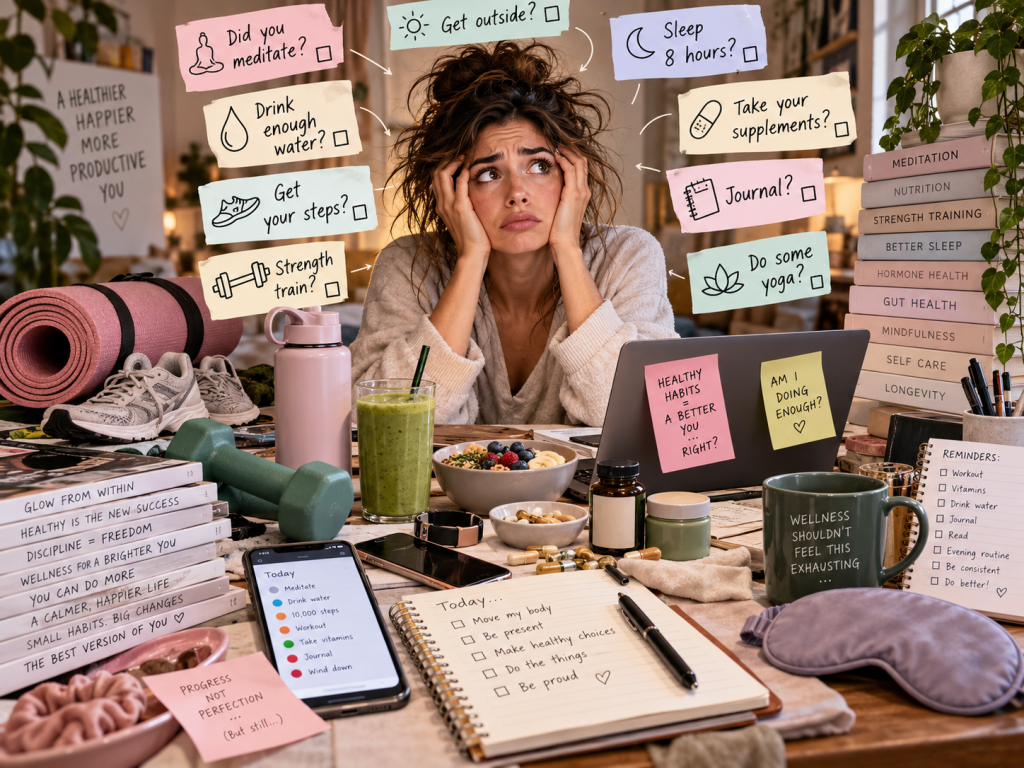
Self-care should not become another job. It should help us build lives that require less rescuing from.
So instead of asking yourself what you need to add this week, perhaps ask yourself what you can change.
1. Ask what you can remove.
Look at your week and identify one commitment, obligation or expectation that is taking more energy than it deserves. Sometimes the fastest way to feel better is not adding another wellness practice. It is creating breathing room.
2. Set one small boundary.
Boundaries do not have to be dramatic. It might mean signing off earlier, protecting one morning, saying no to one invitation, or deciding that every request does not require an immediate response.
3. Pay attention to what actually restores you.
Not what looks like self-care. Not what everyone else is doing. What genuinely leaves you feeling better afterward. For one person it may be yoga. For another it may be dinner with a friend, a walk outside, reading alone, strength training or an early night.
4. Recover before you are depleted.
We tend to think we have earned rest only after we are exhausted. But recovery works much better when it is part of the rhythm of our lives, not an emergency response to burnout.
5. Ask the bigger question.
What would make my everyday life feel more sustainable? That question may lead you somewhere much more meaningful than, “What should I do for self-care today?”
So yes, buy the essential oil if you love it. Book the massage if it’s in your budget. Take the long walk. Make the good coffee. Sit in the morning sun. Call a friend. Enjoy the meal. Go to the spa if that feels good to you.
But let those things support your well-being, not carry the responsibility of saving it.
Because real self-care is not about escaping your life for an hour. It is about creating a life you do not constantly need to escape from.
And as I say often, self-care is not the opposite of ambition. It is what allows ambition to be sustainable.